
Welcome to the Clinical Placement Practice Companion
About this Companion
This interactive companion has been designed to support nursing and allied health students before and during clinical placement. It provides realistic clinical scenarios, practical guidance and opportunities to develop professional decision-making in a safe learning environment.
All scenarios are designed to reinforce good practice and should always be used alongside university guidance, local policies and the supervision of registered professionals.
What You’ll Practise
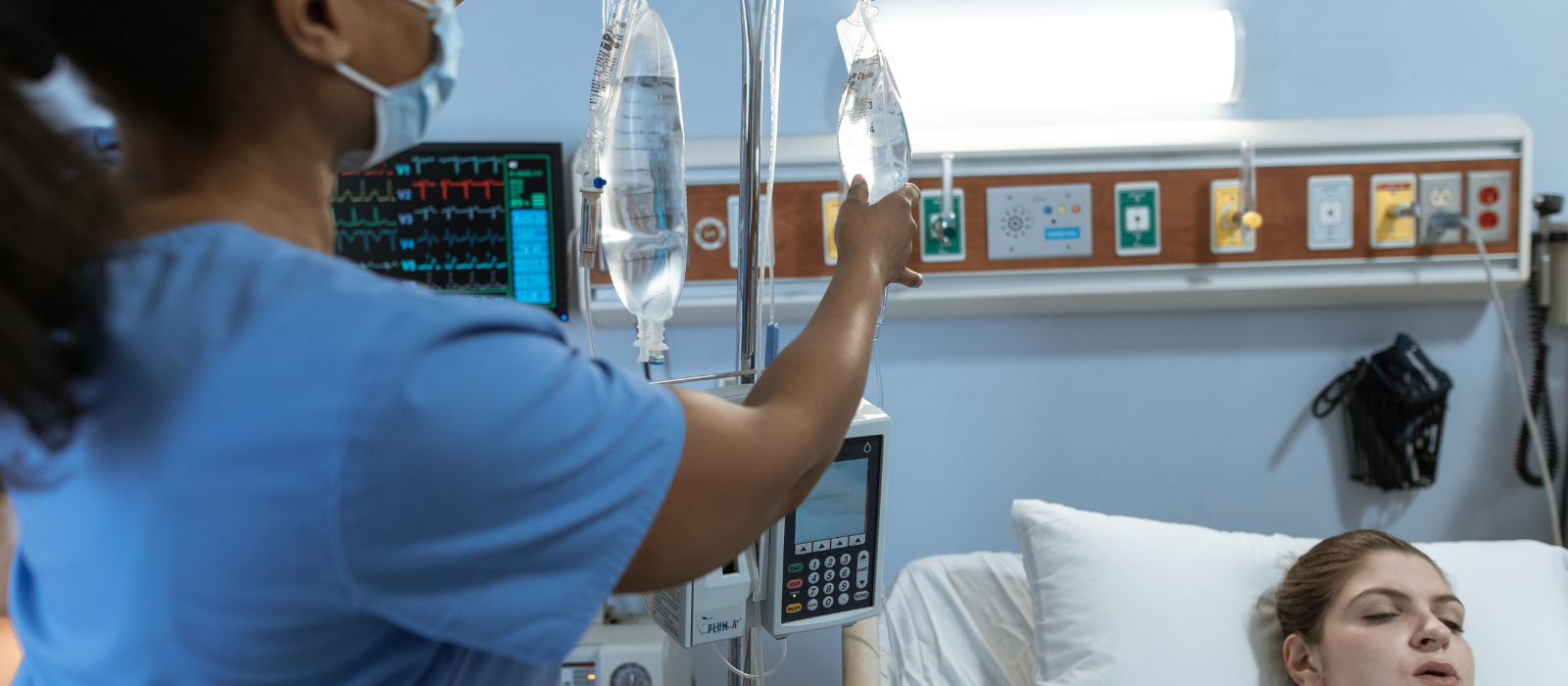
Throughout this companion, you’ll work through realistic clinical scenarios designed to strengthen your confidence before and during placement.
Clinical Scenarios
The following scenarios introduce more complex clinical situations that require safe decision-making, medication awareness and professional judgement. Read each scenario carefully before selecting your response.
Scenario 1 – Patient Fall
Situation
During your morning placement, you notice a patient sitting on the floor beside their bed. They appear alert but look shaken.
Your challenge
What should you do first?
Choose the option you believe is the safest and most appropriate response.
Recommended Response
Call for assistance, remain with the patient and begin an appropriate assessment.
Why?
A patient who has fallen may have injuries that are not immediately obvious. Your first priority is the patient’s immediate safety. Remain with them, call for qualified assistance and follow the local falls procedure. Do not attempt to lift or move the patient before an appropriate assessment has taken place.
Good Practice
- Stay with the patient and reassure them.
- Call for registered assistance immediately.
- Observe for pain, bleeding, confusion or deterioration.
- Follow the placement provider’s falls procedure.
- Document accurately once the patient is safe.
Avoid
- Lifting the patient without an appropriate assessment.
- Leaving the patient alone.
- Assuming there is no injury because the patient is talking.
- Delaying escalation or reporting.
Reflect Before You Continue
Scenario 2 – Responding to Sudden Breathlessness
Clinical Scenario
You are a second-year nursing student on placement on a respiratory ward. While assisting a patient back to their chair, they suddenly become very short of breath. They are struggling to speak in full sentences, appear anxious and their lips look slightly blue. Your supervising Registered Nurse is with another patient nearby.
Your Challenge
What should you do FIRST?
Senario 3 – Sudden Collapses
Scenario 3 – A Patient Suddenly Collapses
Clinical Scenario
You are a second-year nursing student on placement on a busy medical ward. While speaking with a patient who is walking back from the bathroom, they suddenly collapse onto the floor without warning. They are lying motionless. Other patients begin calling for help. Your supervising Registered Nurse is in another bay.
Your Challenge
What should you do FIRST?
Scenario 4 – Medication Safety & Drug Calculation
Scenario 4 – Medication Safety & Drug Calculation
Clinical Scenario
You are on placement in a medical ward. Your supervising Registered Nurse asks you to prepare an IV infusion of Vancomycin 1.25 g.
The ward stock contains:
- Vancomycin 500 mg vials.
- Each vial must be reconstituted with 10 mL Water for Injection.
- After reconstitution, each vial contains 500 mg in 10 mL.
The prescription requires the full dose to be diluted into 250 mL Normal Saline and infused over 90 minutes.
Your Challenge
Before asking your supervisor to check your work, calculate:
- How many vials are required?
- How many millilitres of reconstituted medication will you withdraw?
- What infusion rate (mL/hour) should the pump be set to?
Choose the best answer:
Scenario 5 – Severe Bleeding Following a Deep Laceration
Scenario 5 – Severe Bleeding Following a Deep Laceration
Clinical Scenario
You are a second-year nursing student on placement in the Emergency Department. A 34-year-old patient arrives after falling through a glass door. They have a deep laceration to the forearm with heavy bleeding. Blood is rapidly soaking through the towels applied by the ambulance crew. The patient appears pale, anxious and tells you they feel dizzy. Your supervising Registered Nurse has briefly stepped away to collect emergency equipment. You are the closest member of staff.
Your Challenge
What is your immediate priority?
Scenario 6- Chest Pain
Scenario 6 – Sudden Onset Chest Pain
Clinical Scenario
You are a second-year nursing student on placement on a medical ward. While assisting a patient back to bed, they suddenly stop, clutch their chest and say, “I have crushing pain in my chest… it’s spreading into my left arm.” They become pale, sweaty and appear short of breath. Your supervising Registered Nurse is attending another patient nearby.
Your Challenge
What should you do FIRST?
Scenario 7- Recognising the Deteriorating Patient (Possible Sepsis)
Scenario 7 – Recognising the Deteriorating Patient (Possible Sepsis)
Clinical Scenario
You are a second-year nursing student on placement on a surgical ward. A 72-year-old patient who underwent abdominal surgery two days ago suddenly becomes confused and drowsy. Their observations are:
- Temperature: 39.2°C
- Heart Rate: 126 bpm
- Respiratory Rate: 28 breaths per minute
- Blood Pressure: 88/54 mmHg
- Oxygen Saturation: 91% on room air
The patient says they feel extremely unwell and is becoming increasingly difficult to wake. Your supervising Registered Nurse is attending another deteriorating patient nearby.
Your Challenge
What is your immediate priority?
Scenario 8 – Recognising Possible Safeguarding Concerns
Clinical Scenario
You are a second-year nursing student on placement in the Emergency Department. A 6-year-old child arrives with their parent following a fall at home. While helping the Registered Nurse, the child quietly tells you, “Please don’t tell my dad I told you… he gets really angry.” You notice several bruises of different colours on the child’s arms and back that do not appear consistent with the explanation given. The parent becomes increasingly impatient and repeatedly asks when they can leave.
Your Challenge
What should you do FIRST?
Scenario 9 – Refusal of Treatment
Scenario 9 – Respecting Patient Autonomy: Refusal of Treatment
Clinical Scenario
You are a second-year nursing student on placement on a medical ward. A 68-year-old patient has been prescribed oxygen therapy due to low oxygen saturations. The patient is fully alert, orientated and able to communicate clearly. They remove the oxygen mask and firmly state, “I don’t want it. Leave me alone.” Your supervising Registered Nurse is assisting another patient.
Your Challenge
What is your most appropriate action?
Scenario 10 – Preventing a Medication Administration Error
Scenario 10 – Preventing a Medication Administration Error
Clinical Scenario
You are a second-year nursing student on placement on a medical ward. While observing medication administration, you notice a Registered Nurse preparing to administer insulin to a patient. As the nurse is about to inject the medication, you realise the insulin pen belongs to the patient in the next bed and the name on the medication does not match the patient sitting in front of them. The nurse appears busy and has not noticed the mistake.
Your Challenge
What should you do FIRST?
Scenario 11- De-Escalation and Personal Safety
Scenario 11 – De-escalation and Personal Safety
Clinical Scenario
You are a second-year nursing student on placement on an acute medical ward. A patient becomes increasingly frustrated after being informed there will be a delay in seeing the doctor. The patient begins shouting, pacing around the bay and swearing at staff. Suddenly, they throw a plastic water jug onto the floor and step towards you shouting, “Nobody here cares! I’m sick of waiting!” Your supervising Registered Nurse is helping another patient nearby.
Your Challenge
What is your safest immediate response?
Scenario 12 – Caring For a Patient at the End Of Life care
Scenario 12 – Caring for a Patient at the End of Life
Clinical Scenario
You are a second-year nursing student on placement on a medical ward. A patient receiving end-of-life care appears increasingly restless and uncomfortable. Their family are sitting quietly at the bedside and ask you, “Is there anything we can do to make them more comfortable?” Your supervising Registered Nurse is currently assisting another patient.
Your Challenge
What is the most appropriate response?
Scenario 13 – Ethical Decision Making in Nursing Practice
Scenario 13 – Ethical Decision-Making in Nursing Practice
Clinical Scenario
You are a second-year nursing student on placement on a medical ward. A patient tells you in confidence that they do not want their recent diagnosis shared with any members of their family. Later that day, the patient’s adult daughter approaches you and says, “I’m his next of kin. Please tell me what’s wrong with him.” Your supervising Registered Nurse is temporarily unavailable.
Your Challenge
What is the most appropriate response?
A FINAL WORD
Congratulations on completing the Clinical Placement Practice Companion.
Every placement is an opportunity to learn, grow and develop the knowledge, skills and confidence needed to become a safe and compassionate nurse.
Remember that no student is expected to know everything. What matters most is your willingness to learn, ask questions, seek support and reflect on your experiences. Every patient you meet, every challenge you face and every conversation you have contributes to your development as a future registered nurse.
Approach each placement with professionalism, curiosity and kindness. Stay patient with yourself, celebrate your progress and never underestimate the impact that compassionate, person-centred care can have on the lives of your patients and their families.
Your journey is only just beginning.
GOOD PRACTICE PRINCIPLES
As you continue your clinical placements, keep these principles at the heart of your practice:
- Always place patient safety first.
- Work within your level of competence and seek support whenever you are unsure.
- Communicate clearly, respectfully and professionally with patients, families and colleagues.
- Escalate concerns promptly following local policies and procedures.
- Protect patient dignity, privacy and confidentiality at all times.
- Practise effective infection prevention and control.
- Document accurately, clearly and promptly.
- Treat every patient with compassion, empathy and respect.
- Value teamwork and learn from the experience of others.
- Reflect regularly on your practice and use feedback to continue developing your confidence and clinical judgement.
- Uphold the values and standards of the NMC Code throughout your nursing career.
REFLECTION
Before you begin your next placement, take a few moments to reflect on your learning.
Consider the following questions:
- Which scenario challenged your thinking the most?
- Which clinical situation would you feel most confident managing?
- Which area of practice would you like to develop further?
- How will you apply what you have learned during your next placement?
- How will you continue to develop your communication, professionalism and clinical judgement?
- What does compassionate, person-centred care mean to you?
- How will you contribute positively to the multidisciplinary team?
- What kind of nurse do you aspire to become?
“Every expert nurse was once a student who chose to keep learning. Continue to ask questions, embrace every opportunity to grow and always remember that your compassion is just as important as your clinical knowledge.”